Conference Venue
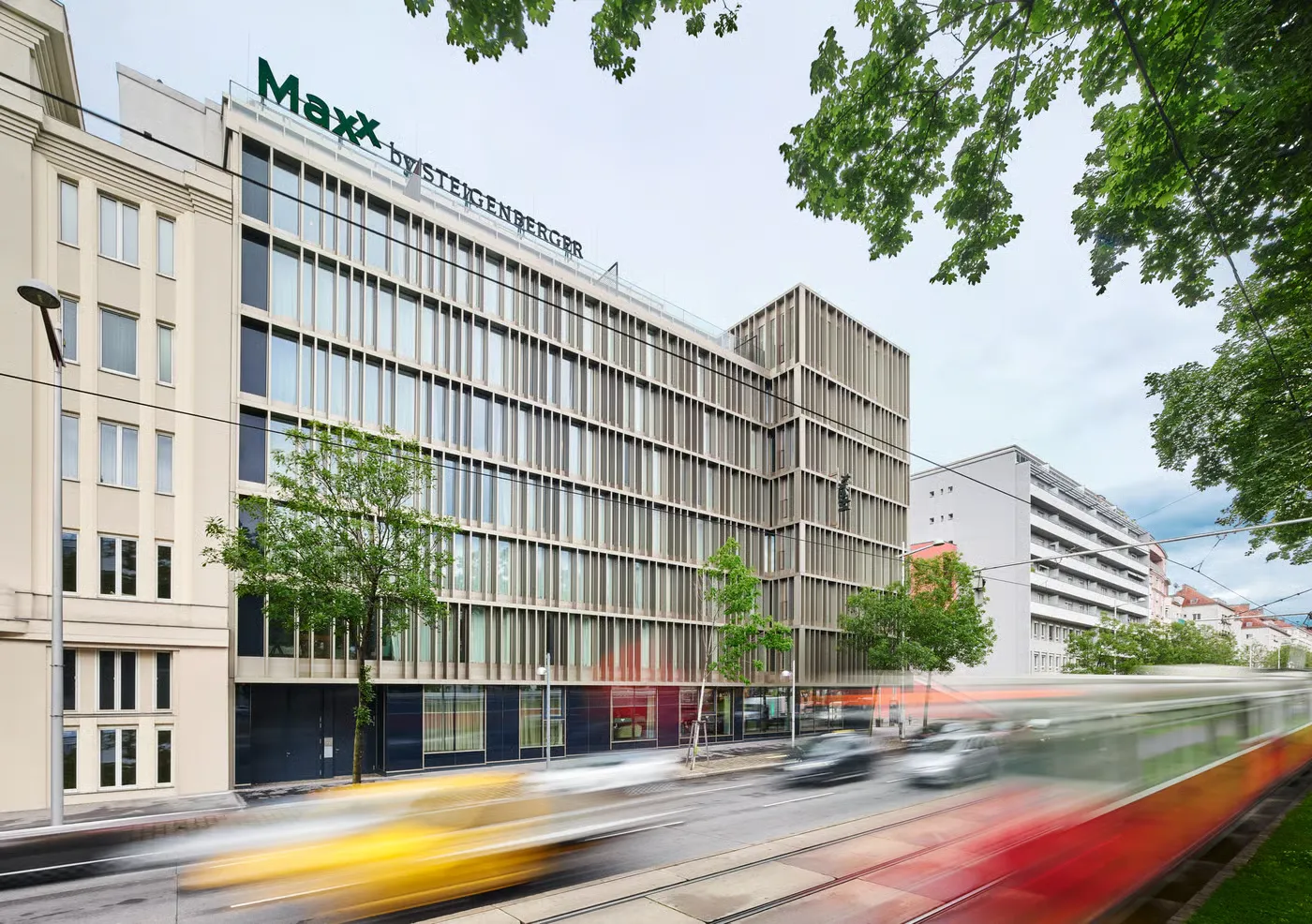
MAXX by Steigenberger Vienna
Address: Margaretengürtel 142, 1050 Vienna, Austria
How to get there?
- Route: From Wien Hauptbahnhof (Vienna Central Station), take U1 (Leopoldau direction) to Karlsplatz, then transfer to U4 (Hütteldorf direction) and get off at Margaretengürtel station. The hotel is approximately a 2-minute walk from the station.
- Travel Time: Approximately 15–20 minutes from Wien Hauptbahnhof.
- Frequency: Trains run every 2–5 minutes during the day.
- Cost: Approximately €2.40–2.60 for a standard single ticket within Vienna.
- Route: From Wien Hauptbahnhof, take Bus 13A toward Alser Straße and get off at Margaretengürtel / Arbeitergasse. The hotel is about a 2–3-minute walk from the bus stop.
- Travel Time: Approximately 20–25 minutes.
- Frequency: Buses run every 5–8 minutes during the day.
- Cost: Approximately €2.40–2.60 for a standard single ticket.
- Route: Take a direct taxi to MAXX by Steigenberger Vienna, Margaretengürtel 142, 1050 Vienna.
- Travel Time: Approximately 10–15 minutes from Wien Hauptbahnhof, depending on traffic.
- Cost: Approximately €15–25, depending on traffic and time of day.
Taxi Services:
- 40100 Taxi: +43 1 40100
- Taxi 31300: +43 1 31300
- Uber: Available throughout Vienna
Conference Accommodation

Vienna’s Required Information
The currency of Vienna (and all of Austria) is the Euro (sign: €; code: EUR). Austria is a member of the European Union and part of the Eurozone, so it uses the common European currency.
The plural form of the currency is “euros.”
All power sockets in Vienna provide a standard voltage of 230V with a standard frequency of 50Hz. You can use your equipment in Vienna if the outlet voltage in your country is between 220V–240V. This applies to most of Europe, Australia, the United Kingdom, and many countries in Africa and Asia.
Austria is part of the Schengen Area. Passports should generally be valid for at least six months beyond your stay. Depending on the purpose of your visit (tourism, study, work, or long-term residence), you may need to apply for a specific type of Schengen visa. Citizens of many countries can enter visa-free for short stays.
Vienna International Airport is the main international airport serving Vienna and is located about 18 km southeast of the city center. It is well connected to the city via trains, buses, and taxis.
Wien Hauptbahnhof (Vienna Central Station) is the city’s main railway hub. It handles numerous domestic and international routes daily and offers modern facilities, shops, restaurants, and easy connections to public transport.
Vienna’s public transport system is efficient and extensive, including metro (U-Bahn), trams, and buses operated by Wiener Linien. A single ticket can be used across all modes, and services are known for punctuality and convenience.
Austria regulates the import of medications. Travelers are generally allowed to bring personal medication for their stay, but controlled substances (such as those containing certain stimulants or narcotics) may require a doctor’s prescription and documentation. It’s recommended to carry only a reasonable personal supply.
Vienna promotes sustainable mobility, including electric buses, trams, and car-sharing services. The city continues to invest in environmentally friendly transport solutions to reduce emissions and traffic congestion.
Vienna is a bike-friendly city with an expanding network of cycling paths. Public bike-sharing services like Citybike Wien make it easy for residents and visitors to rent bicycles and explore the city.